Plastic Sprue & Runner Shredder for Injection Molding Waste
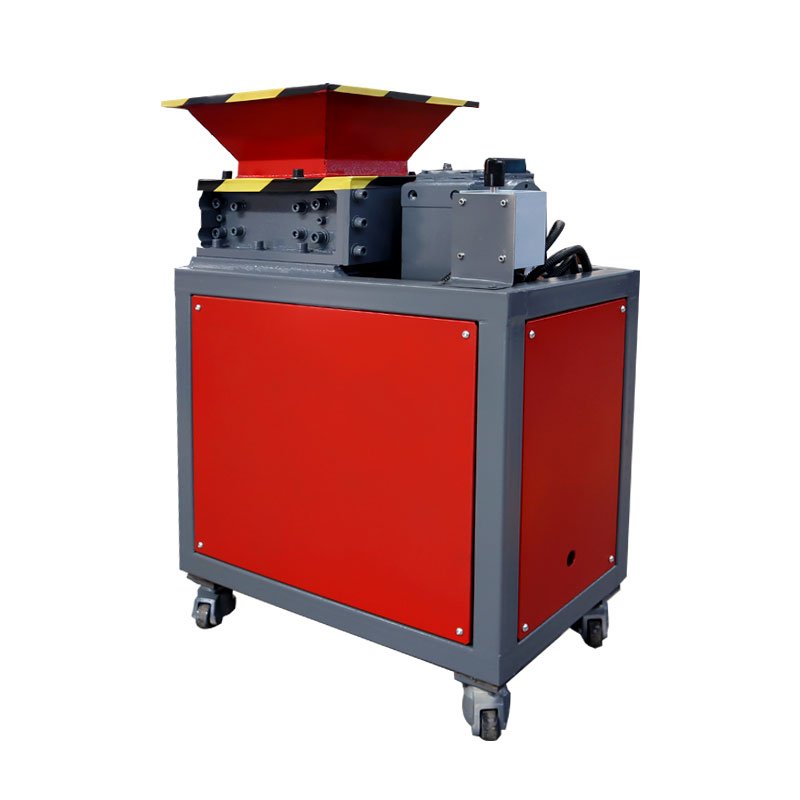
Plastic sprues, runner frames and rejected molded parts can often be reduced close to the injection molding process, but the correct shredder depends on the actual waste—not only the polymer name. Send the complete frame dimensions, maximum runner diameter and part thickness, material grade, required output, feeding pattern and hourly or shift volume before selecting a machine. FYXFER normally starts with the compact FY-SS01 Plastic Shredder for suitable, manageable production scrap. Large, thick, tough, mixed or highly irregular pieces require a separate review and may point to the custom-engineered FY-SS02 heavy-duty industrial shredder .
At a glance
- Typical feed: injection molding sprues, runner frames, trims and rejected molded parts
- Common polymers for evaluation: PP, HDPE, ABS and PC, plus other disclosed grades and blends
- Most important sizing data: complete feed dimensions, runner diameter, maximum section thickness and largest rejected part
- Output decision: state the required downstream result; do not assume one cutter or screen arrangement suits every process
- Capacity decision: use the real kg/h or kg/shift and describe whether feeding is continuous or intermittent
- Machine starting point: FY-SS01-300 for suitable routine scrap; FY-SS02 only after review of more demanding feed
Why injection molding waste needs application-based selection
The name of a polymer does not fully describe how it will behave in a cutting chamber. A thin PP runner frame, a thick glass-filled engineering-plastic sprue and a dense rejected housing can differ greatly in stiffness, toughness, shape and feeding behavior. Additives, fiber reinforcement, metal inserts, moisture and contamination can also affect cutter loading, wear, output and safety.
For this reason, a useful shredder enquiry identifies both the typical pieces and the most difficult pieces expected in normal production. Photos with a ruler or known scale are helpful. A representative sample or controlled material trial may be needed before the final cutting system, output expectation and acceptance criteria are agreed.
Which injection molding waste can be evaluated?
Plastic sprues and runner frames
Cold-runner frames, branches, gates and central sprues can be evaluated when their full outside dimensions, runner diameter, section thickness and polymer are known. The frame must fit the confirmed hopper and cutting-chamber opening safely; it should not be forced through an undersized opening.
Rejected molded parts
Housings, containers, covers and other rejected parts may be suitable, but overall size alone is not enough. Wall thickness, ribs, bosses, material grade, reinforcement and any metal insert must be disclosed.
Trims and production offcuts
Consistent trims and smaller plastic offcuts are often easier to handle than tangled or bulky frames. Long strips, tubes or profiles still require a feeding review because their shape can change how they bridge, wrap or enter the cutter.
PP and HDPE
PP and HDPE molding waste is common, but flexibility, wall thickness, temperature and piece geometry still matter. Flexible pieces may deform rather than fracture in the same way as rigid feed, so the actual material should be reviewed.
ABS and PC
ABS and PC parts can be tougher than some commodity-plastic scrap. Thick sections, impact-modified grades and reinforced formulations can increase the cutting load. Provide the grade where known and include the most difficult sample in any material review.
> Material names above are examples for evaluation, not blanket processing guarantees. Suitability, output and capacity must be confirmed for the actual feed and machine configuration.
Can the shredder process a complete runner frame?
Possibly, if the complete frame fits the approved hopper and cutting chamber and its branches, central sprue and thickest sections are within the confirmed application limits. Measure the frame at its widest and longest points; then record the maximum runner diameter and central-sprue thickness separately.
A frame that appears light can still bridge across a small hopper, catch on its branches or present a much thicker central section than the rest of the runner. Send a clear photo of the whole frame and close-up photos of the thickest areas. If the frame cannot be presented safely and consistently, pre-cutting or a larger feeding arrangement may be needed.
Should large runners be pre-cut?
+
Pre-cutting may be the practical choice when a runner frame is wider than the approved opening, contains a very thick central sprue, bridges in the hopper or cannot be handled safely by the planned loading method. It may also help create a more consistent feed for a compact machine.
Do not decide only from the nominal hopper dimensions. The usable opening, guarding, feeding clearance, operator access and cutter geometry all matter. FYXFER should review the uncut frame first so that the recommendation can compare pre-cutting with a different hopper or machine platform.
Key selection factors
+
1. Polymer and formulation
Identify PP, HDPE, ABS, PC or the relevant resin. Add grade information, fillers, glass fiber, flame retardants and other additives where known. Do not mix undisclosed materials into a test sample.
2. Complete feed size
Record the maximum length, width and height of the full runner frame or rejected part. Include photographs with a scale. The largest occasional piece can determine the necessary opening even when most scrap is smaller.
3. Runner diameter and maximum thickness
Measure the thickest runner, central sprue, rib, boss or molded wall. Thick localized sections can impose a different load from thin branches.
4. Hopper size and feeding method
The hopper must suit the complete feed geometry, loading height and operating method. State whether operators will feed pieces individually, tip a container, use a conveyor or connect the machine to another handling step. Guarding and safe reach distances must be included in the final design review.
5. Required output size
Explain what happens after size reduction and give a target range when the downstream process requires one. A request for “small pieces” is not precise enough for cutter, screen or granulator selection.
6. Screen or no screen
A screen can help control the maximum discharged piece size in a compatible machine, but it can also affect recirculation, heat generation, power demand, throughput and sensitivity to contamination. A screenless discharge may be appropriate for primary volume reduction where a controlled fine output is not required. The choice must match the material, cutter arrangement and downstream process.
7. Required capacity and duty cycle
Provide kg/h or kg/shift based on weighed production scrap where possible. State whether material arrives steadily or in batches after mold changes, quality checks or production runs. A short peak feed rate can matter even when the average daily mass is modest.
8. Motor power selection
Motor power should follow the cutting task rather than a generic rule based on polymer name. Piece thickness, toughness, cutter geometry, shaft speed, feeding consistency, screen, contamination and duty cycle all affect the drive requirement. Do not select a machine only because it has a higher quoted kW value.
9. Noise and dust
Noise depends on the machine, material, feed impact, cutting action, enclosure and installation. Dust and fines depend on the polymer, contamination, moisture, cutting speed, cutter condition and required output. Ask for a project-specific review if the machine will operate beside molding personnel or if the material creates combustible dust. Extraction, isolation and housekeeping measures must be based on a site risk assessment.
10. Blade and cutter maintenance
Maintenance planning should cover inspection intervals, access, cleaning, fastener checks, wear criteria, cutter or blade service, safe isolation and spare parts. Abrasive fillers, glass reinforcement, metal contamination and unsuitable feed can accelerate wear. Record the real material mix before discussing maintenance expectations.
11. Safety and contamination
Disclose metal inserts, screws, tooling fragments, stones, liquids, hot material and any hazardous contamination. Batteries, pressure vessels and unknown hazardous items must not enter a general plastic-waste shredder. The supplied system should include the guarding, emergency stops, overload strategy and operating procedures agreed for the project. Operators must follow the machine-specific manual and site lockout/tagout rules.
Common selection mistakes
+
- Sending only the polymer name. “ABS runner” does not describe the frame size, central-sprue thickness, reinforcement or feeding behavior.
- Measuring a branch but not the full frame. Hopper and guarding decisions depend on the complete outside dimensions.
- Assuming the hopper dimensions equal the safe usable opening. Feeding clearance, guards and the cutter chamber must also be confirmed.
- Quoting a desired capacity without weighing the scrap. Use real mass per hour or shift and describe peak batches.
- Treating shredded and granulated output as the same result. Define the downstream size and process first.
- Ignoring contamination and inserts. Undisclosed metal or hazardous items can change machine selection and risk.
- Choosing by motor kW alone. Cutting geometry, speed, torque, material and duty must be evaluated together.
Prepare the application before choosing the machine
+
Compare the broader Industrial Waste Shredder Selection Guide, the Plastic Shredder Capacity Guide and the Single-Shaft vs Dual-Shaft Shredder Guide before fixing a machine type. The Waste Shredder Series page provides the category-level comparison.
Request a sprue and runner shredding review
+
Send FYXFER the polymer and grade, complete runner-frame dimensions, maximum runner or sprue diameter, maximum molded-part thickness, photos, required output, actual kg/h or kg/shift, feeding method, contamination, downstream process and destination power supply.
Low-speed shredder or high-speed granulator?
These machines serve different process objectives and are sometimes used as two stages rather than direct substitutes.
| Selection factor | Low-speed shredder | High-speed granulator |
|---|---|---|
| Primary role | Controlled size reduction and volume reduction of suitable scrap | Finer, more uniform granulation of prepared plastic feed |
| Feed condition | Can be evaluated for larger or more irregular pieces, depending on hopper and cutter configuration | Usually benefits from smaller, controlled feed within the granulator's approved opening |
| Operating approach | Lower shaft speed with torque-focused cutting | Higher rotor speed with cutting against fixed knives |
| Output | Depends on cutter, screen or discharge arrangement and material | Typically selected when a defined regrind size is important |
| Dust and fines | Often lower-speed handling, but actual dust still depends on material and configuration | Higher-speed cutting can create more fines or noise for some materials |
| Best first question | Is the full runner frame or rejected part manageable and safe to feed? | What regrind size and cleanliness does the downstream process require? |
If the required final output is finer than the practical result of primary shredding, the process may use a shredder followed by a granulator. Define the downstream step—collection, conveying, sorting, regrinding or direct reuse—before deciding whether one or two stages are required.
FY-SS01-300 or FY-SS02?
| Application condition | FY-SS01-300 compact plastic shredder | FY-SS02 custom heavy-duty shredder |
|---|---|---|
| Best starting point | Suitable routine plastic runners, sprues, trims and smaller rejected parts | Bulky, tough, mixed, contaminated or highly irregular industrial feed requiring primary reduction |
| Feed consistency | More consistent and manageable production scrap | Variable or more demanding waste streams |
| Configuration basis | Published compact reference configuration plus application confirmation | Fully project-defined shafts, cutters, hopper, drive, discharge, guarding and controls |
| Published power | 3 kW reference drive | No universal power; defined after cutting-system and duty review |
| Published feed reference | 500 × 500 × 300 mm specified hopper dimensions; usable opening and feeding clearance must be confirmed | Hopper and opening sized to approved feed pieces and loading method |
| Published output/capacity | Not fixed; establish with the actual material, feeding conditions and required result | Material- and process-dependent; project quoted |
| When not to assume suitability | Oversized frames, thick/tough pieces, contamination or required fine output outside the confirmed configuration | Small routine runners do not automatically justify a heavy-duty platform |
FY-SS01-300 verified reference specification
The following values are from the published FY-SS01-300 Rev A reference. Final supply follows the approved quotation and drawings.
| Parameter | Published reference |
|---|---|
| Motor | 3 kW, 4-pole, one motor |
| Electrical supply | 380 V, 50 Hz, three phase |
| Reducer | K77-16 |
| Cutter / shaft speed | 16 rpm in Rev A; confirm the ordered drive |
| Specified shaft torque | 1,628 Nm in Rev A; confirm the ordered drive |
| Shaft diameter | 75 mm |
| Cutters | 24 discs; 180 mm diameter × 12 mm; 9CrSi |
| Feed opening / hopper dimensions | 500 × 500 × 300 mm as specified; confirm usable opening and feeding clearance |
| Discharge | 450 mm width; 200 mm height above floor in the reference sheet; confirm the drawing datum |
| Overall dimensions | 1,081 × 570 × 1,329 mm (L × W × H) |
| Reference weight | Approximately 400 kg |
| Throughput and output size | Establish for the material, feeding conditions and required result |
Review the FY-SS01-300 product page or download the FY-SS01-300 Rev A technical datasheet.
FY-SS02 is not a fixed-size catalog specification
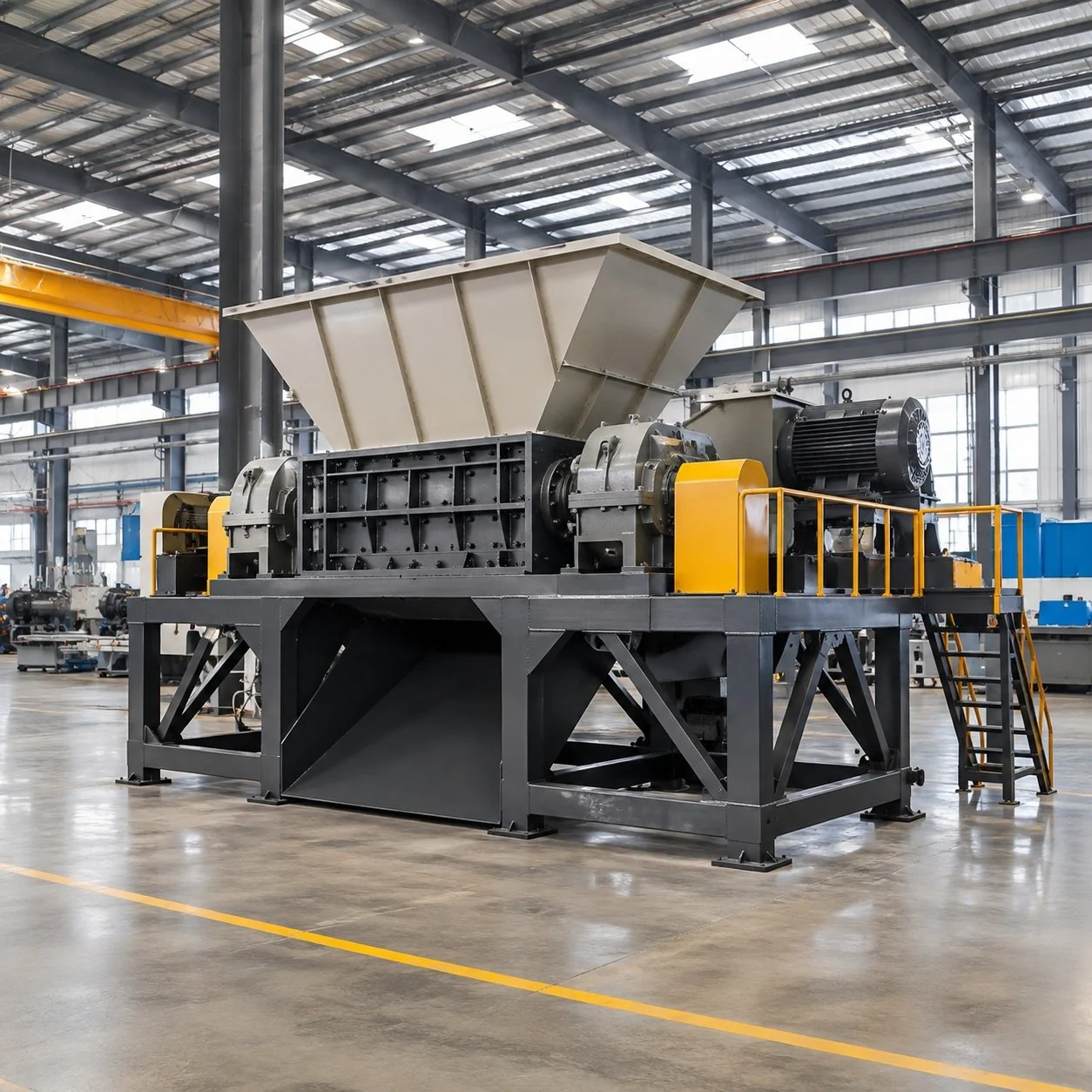
FY-SS02 is a custom-engineered heavy-duty dual-shaft platform using low-speed, high-torque tearing and shearing. Feedstock, shaft and cutter configuration, feed opening, hopper, electric or hydraulic drive, power, torque, speed, throughput, output, dimensions and weight are defined for the approved project. There is no universal FY-SS02 power, capacity or opening that can be safely copied into a runner-shredding recommendation.
Review the FY-SS02 project platform or download the FY-SS02 Rev A technical datasheet.
Information to send for a useful quotation
| Required input | What to provide |
|---|---|
| Material | Polymer and grade; note fillers, glass fiber, additives and mixed materials |
| Maximum overall feed size | Maximum L × W × H of the complete runner frame or rejected part |
| Runner / sprue diameter | Maximum runner diameter and central-sprue diameter |
| Maximum thickness | Thickest molded wall, rib, boss or solid section |
| Required output size | Target range and the downstream use of the reduced material |
| Required capacity | Weighed kg/h or kg/shift, plus peak batch size |
| Feeding pattern | Continuous or intermittent; manual, bin-tip or conveyor loading |
| Contamination | Metal inserts, tooling fragments, labels, liquids, dirt or other material |
| Installation and discharge | Available floor space, loading height, collection bin, bag or conveyor |
| Voltage | Destination voltage, frequency and phase |
| Evidence | Photos with scale, video of the waste stream and a representative sample if requested |
Use the Plastic Shredder Buying Checklist to organize this information before requesting a review.
Frequently asked questions
+
Can a shredder process complete plastic runner frames?
It may be able to process a complete frame if the full dimensions, branches and thick central sprue fit the approved feeding arrangement and cutting chamber. Send the whole-frame dimensions, maximum runner diameter, material and photos before assuming it can be fed without pre-cutting.
Do large sprues or runners need to be pre-cut?
They may need pre-cutting when they exceed the safe usable opening, bridge in the hopper or contain sections beyond the confirmed cutting range. A larger hopper or different machine platform may be another option. Compare the full workflow before choosing.
Is FY-SS01-300 suitable for PP, HDPE, ABS or PC runners?
FY-SS01-300 is the normal starting point for evaluating suitable routine plastic production scrap, including runners and sprues. Suitability is not determined by polymer name alone; grade, reinforcement, piece size, thickness, contamination, output and duty must be reviewed.
When should FY-SS02 be considered?
Consider the FY-SS02 project platform when feed is bulky, thick, tough, mixed, contaminated, highly irregular or outside the practical range of the compact machine. FY-SS02 has no universal power, capacity, opening or dimensions; its configuration is defined after application review.
Should I choose a shredder with a screen?
Choose the discharge arrangement from the required downstream result. A screen can help control maximum output size in a compatible design, but can affect throughput, heat and recirculation. Primary reduction may use another arrangement. The material and process must be reviewed together.
What output size will I get?
Output depends on the polymer, feed form, cutter geometry, screen or discharge arrangement, cutter condition and operating method. State the required output range and downstream use, then confirm it through the selected configuration and, where appropriate, a representative trial.
Is a low-speed shredder quieter and cleaner than a granulator?
Low-speed processing may reduce some impact noise and fines compared with high-speed cutting, but no universal noise or dust level should be assumed. Material, feed impact, enclosure, cutters, installation and collection system all affect the result. Request a site- and material-specific review.
What material should I send for a test?
Send a representative batch containing normal pieces and the largest, thickest or toughest pieces expected in production. Include normal contamination and moisture, disclose inserts or reinforced grades, and define how the output will be accepted.
Downloads
Related equipment
Tell us what you need.
Describe the material and feed size, then the required output and downstream handling. Add the duty and loading method when known.
Selected equipment
Plastic Sprue & Runner Shredder for Injection Molding Waste
Continue to project inquiry ↗