Lower Waste Volume
Reduce suitable plastic scrap into a more manageable form for collection and transport.
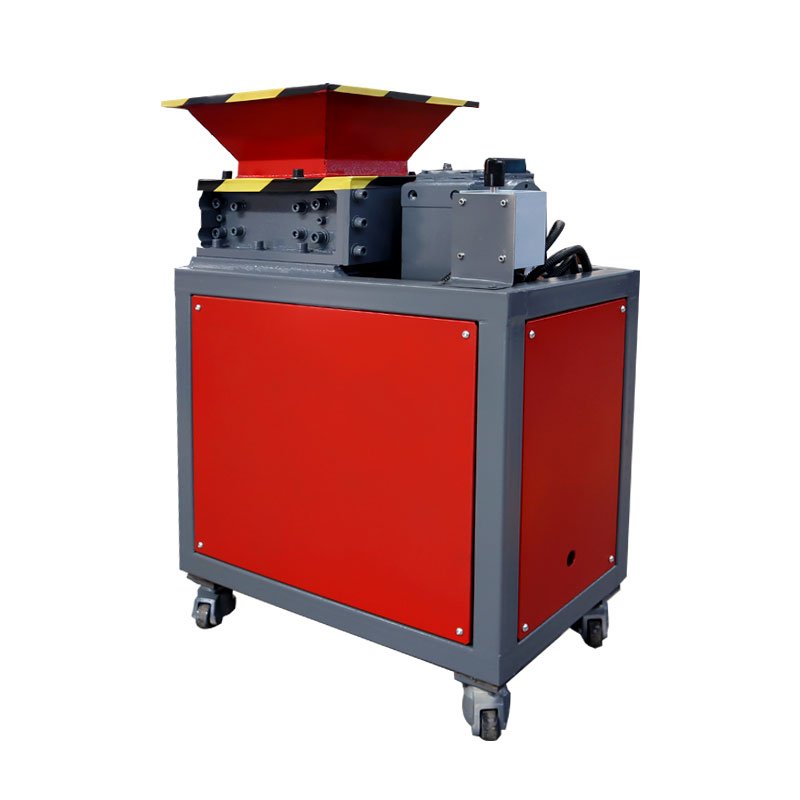
The FY-SS01-300 is a compact starting point for reducing suitable plastic production scrap, including runners, trims and smaller rejected parts. Its published reference configuration uses a 3 kW drive. Select it around the actual material, maximum piece size and required downstream result; throughput and particle size require application review.
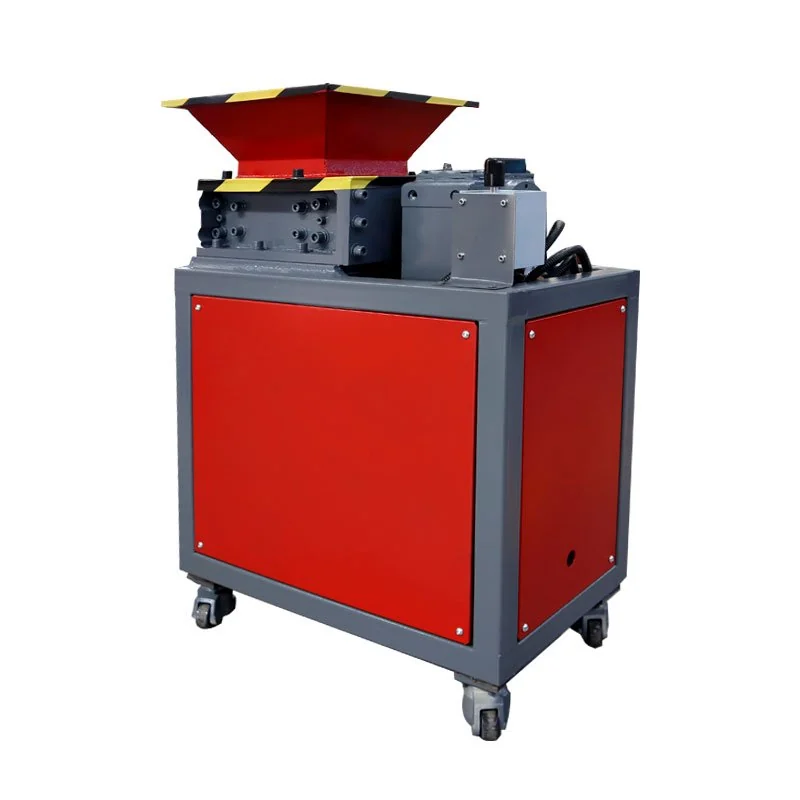
The FYXFER standard plastic shredder is intended for common, manageable plastic waste streams where a compact machine and straightforward operating process are more important than heavy-duty bulky-waste capability.
| Feed material | What to check before selecting the machine |
|---|---|
| Runners, sprues and small moulded rejects | Polymer grade, wall thickness, toughness and maximum piece size |
| Sheet, profile and tube offcuts | Longest dimensions, section shape and feeding behaviour |
| Small rigid containers and packaging parts | Material formulation, shape, residues and contamination |
| Mixed, bulky or demanding waste | Review a different cutting arrangement or the FY-SS02 project platform before choosing |
Provide the actual material rather than relying on a product-family label. Moisture, embedded metal and other contamination must be disclosed. The reference datasheet also mentions non-plastic materials; these need separate assessment and are not a blanket suitability claim for this configuration.
A compact starting point for companies that need to reduce common plastic scrap without specifying an oversized heavy-duty shredding system.
Reduce suitable plastic scrap into a more manageable form for collection and transport.
A compact machine can be positioned around suitable production or recycling workflows.
Replace irregular manual breakdown with a more repeatable material-size reduction step.
Prepare suitable plastics for collection, reprocessing, separation, or the next recycling stage.
Feed suitable waste through a hopper selected around material size and operator workflow.
Controls, guarding, discharge, and optional handling can be reviewed for the application.
Confirm that the plastic type and piece size are suitable for the selected machine.
Load material according to the confirmed feeding method and operating guidance.
The cutting chamber pulls in and breaks suitable plastic waste into smaller pieces.
Transfer the shredded material to a bin, bag, conveyor, or next process as configured.
Share the plastic type, normal and maximum piece size, wall thickness, contamination, feeding method, hourly or daily volume, and desired output. Material photos and a small test sample are especially useful.
These values describe the published reference build. Final supply follows the agreed quotation and drawings.
| Parameter | Reference value or condition |
|---|---|
| Motor | 3 kW, 4-pole; one motor |
| Electrical supply | 380 V, 50 Hz, three phase |
| Reducer | K77-16 |
| Cutter / shaft speed | 16 rpm in the Rev A datasheet; confirm the ordered drive |
| Specified shaft torque | 1,628 Nm in Rev A; confirm the ordered drive |
| Shaft diameter | 75 mm |
| Cutters | 24 discs; 180 mm diameter × 12 mm; 9CrSi |
| Feed opening / hopper dimensions | 500 × 500 × 300 mm as specified; confirm usable opening and feeding clearance |
| Discharge | 450 mm width; 200 mm height above floor in the reference sheet; confirm the drawing datum |
| Overall dimensions | 1,329 × 570 × 1,081 mm (L × W × H; reference drawing) |
| Reference weight | Approximately 400 kg |
| Throughput and output size | To be established for the material, feeding conditions and required result |
Download the English technical datasheet — Rev A, 30 August 2026
The material size, toughness, contamination, feed condition, and target capacity determine the correct machine family.
For bulky, mixed or more demanding feed, compare the FY-SS02 heavy-duty platform. A larger machine is also application-specific; its capacity must be confirmed. Use the industrial shredder selection guide to compare material size, output, throughput, motor and cutter requirements.
Start here for suitable offcuts, runners, trims, smaller rejected parts, and regular production waste that can be fed into a compact system.
Review a heavy-duty shaft shredder when materials are larger, tougher, mixed, contaminated, or require substantially stronger low-speed processing.
Actual output depends on the plastic, feed condition, cutting configuration, and operating method. A material review or sample test is recommended before final selection.
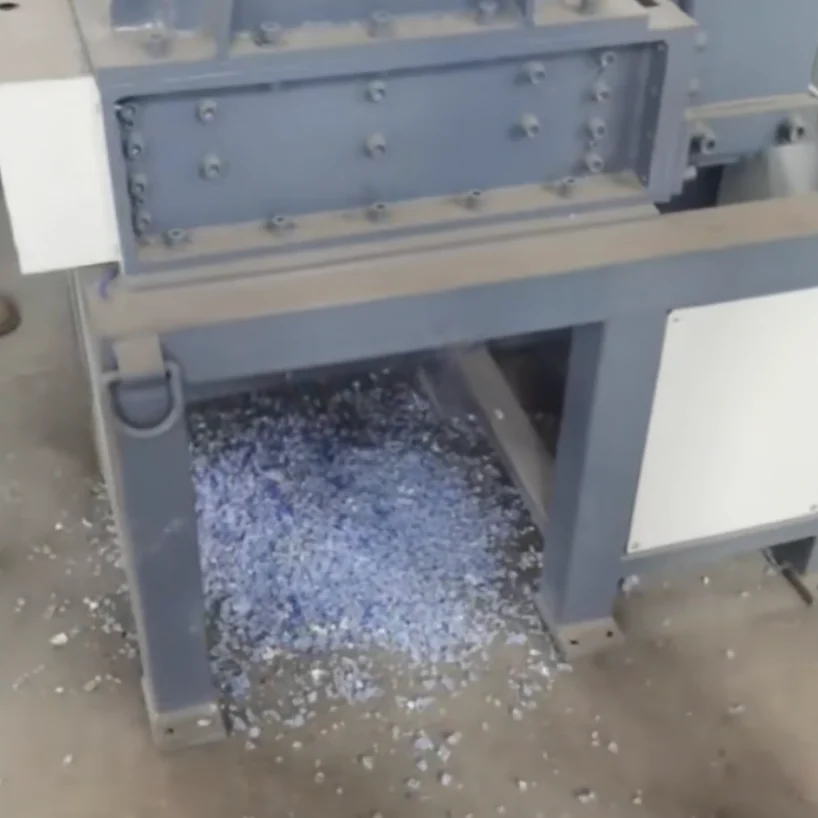
Review suitable runners, sprues, trims, and smaller rejected molded parts.
Reduce suitable sheet, profile, tube, or fabrication offcuts after material review.
Process suitable thin-walled containers, housings, and production rejects.
Evaluate clean and manageable rigid packaging waste for localized reduction.
Reduce suitable plastic trimming, edge waste, and regular line-side scrap.
Support internal collection and preparation for reuse or downstream processing.
Please provide the plastic type, normal and maximum piece size, thickness, shape, contamination, hourly or daily volume, feeding method, required output, and destination power supply. Photos, video, or a test sample are valuable.
Possibly, but each material should be reviewed. Hardness, toughness, flexibility, wall thickness, additives, and contamination can change feeding behavior, output, wear, and capacity.
Output depends on the material and cutting configuration. The required downstream use should be explained so FYXFER can recommend an appropriate arrangement and confirm expectations.
Moisture, dirt, metal, and other contamination must be disclosed during selection. Some materials may require sorting, cleaning, metal removal, or a different machine format before shredding.
Yes. Feeding, discharge, collection, bagging, and transfer options can be reviewed according to the available space and workflow.
Project support can include operating documentation, remote technical assistance, troubleshooting coordination, and spare-parts guidance. The applicable scope should be confirmed for each order.
Start here for suitable routine plastic scrap, runners, trims and smaller rejected parts.
Send representative plastic samples or photos with maximum piece size, wall thickness and contamination.
Define the required output size, accepted hourly output and downstream process.
Confirm feeding, collection, working space and destination power for the FY-SS01-300 configuration.
Use this checklist for an initial review. Final machine limits, options and acceptance criteria are confirmed in the project quotation.
Send the polymer or material grade, photographs, normal and maximum piece dimensions, wall thickness and contamination. Add the amount to process per hour or shift, feeding method, required output condition, downstream process and destination power supply. Explain how the result will be accepted, including any sample-test requirement.
Compare FY-SS01-180 / 300 / 400 / 500 and FY-SS01-300-2S / 400-2S / 500-2S using verified configuration data.
Capacity and output are confirmed from your actual material.Use the industrial shredder selection guide to compare material size, output, throughput, motor and cutter requirements before confirming FY-SS01-300.
The published compact reference includes a 3 kW motor and a 500 × 500 × 300 mm hopper. These dimensions and motor power do not establish throughput, particle size or suitability for every plastic.
Request identification of the tested machine, cutter configuration, feed preparation and operating settings. Record input mass, elapsed processing time including stops, output-size observations, rejected material and any refeeding. Keep photographs or video tied to that record. A result for a different polymer or feed geometry is not proof of your production rate.
For a compact configuration comparison, review the seven-model FY-SS01 family. For bulky or demanding feed, review the FY-SS02 project platform. Use the material selection guide and send the sample brief to FYXFER before confirming a machine.