Products / Waste ShreddersFYXFER Equipment SeriesIndustrial Waste Shredders
Industrial size-reduction equipment for common plastic waste, bulky items, mixed materials, and demanding waste-processing projects. Machine selection begins with the actual material and output target.
Compare ShreddersDiscuss Your Material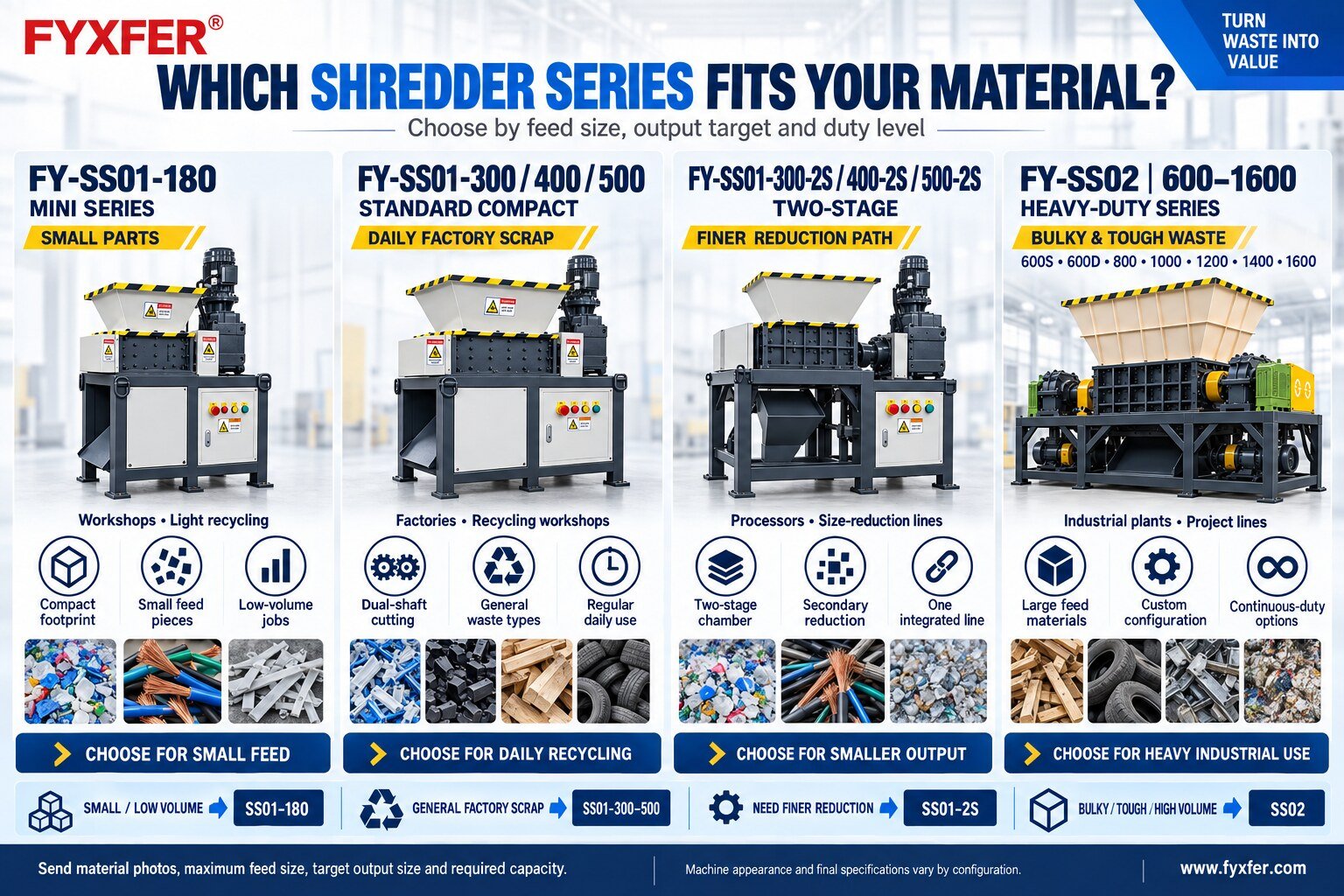 Material-driven selectionFeed size, material type, throughput, and target output guide the configuration.
MaterialWhat must be shredded?
Material-driven selectionFeed size, material type, throughput, and target output guide the configuration.
MaterialWhat must be shredded?Share material type, condition, and photos.
Feed sizeNormal and maximum inputConfirm dimensions, density, and irregularity.
OutputSize and capacity targetDefine the downstream handling requirement.
WorkflowFeeding and dischargeReview conveyors, separation, and controls.
Machine SelectionChoose the shredding approach around the material
The standard and heavy-duty machines serve different material conditions. Representative samples, photos, and output requirements are essential before configuration.
Get selection support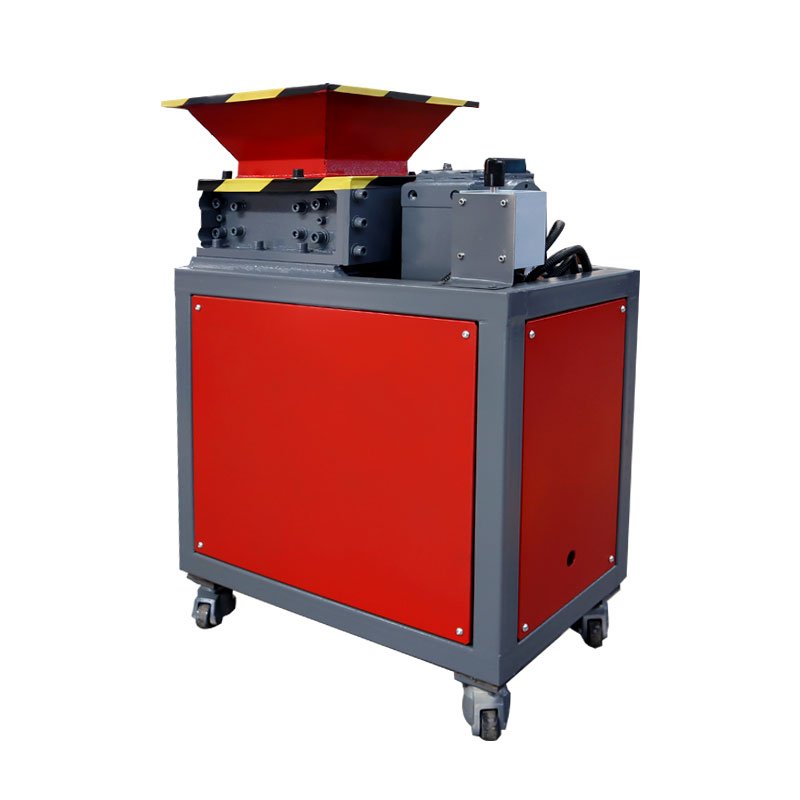 Plastic Processing
FY-SS01 Compact Shredder Series
Seven verified model paths cover mini, standard compact, and integrated two-stage four-shaft reduction for factory-side recycling.
- FY-SS01-180 mini
- FY-SS01-300 / 400 / 500 compact
- FY-SS01-300-2S / 400-2S / 500-2S
- Material-tested selection
Compare seven FY-SS01 models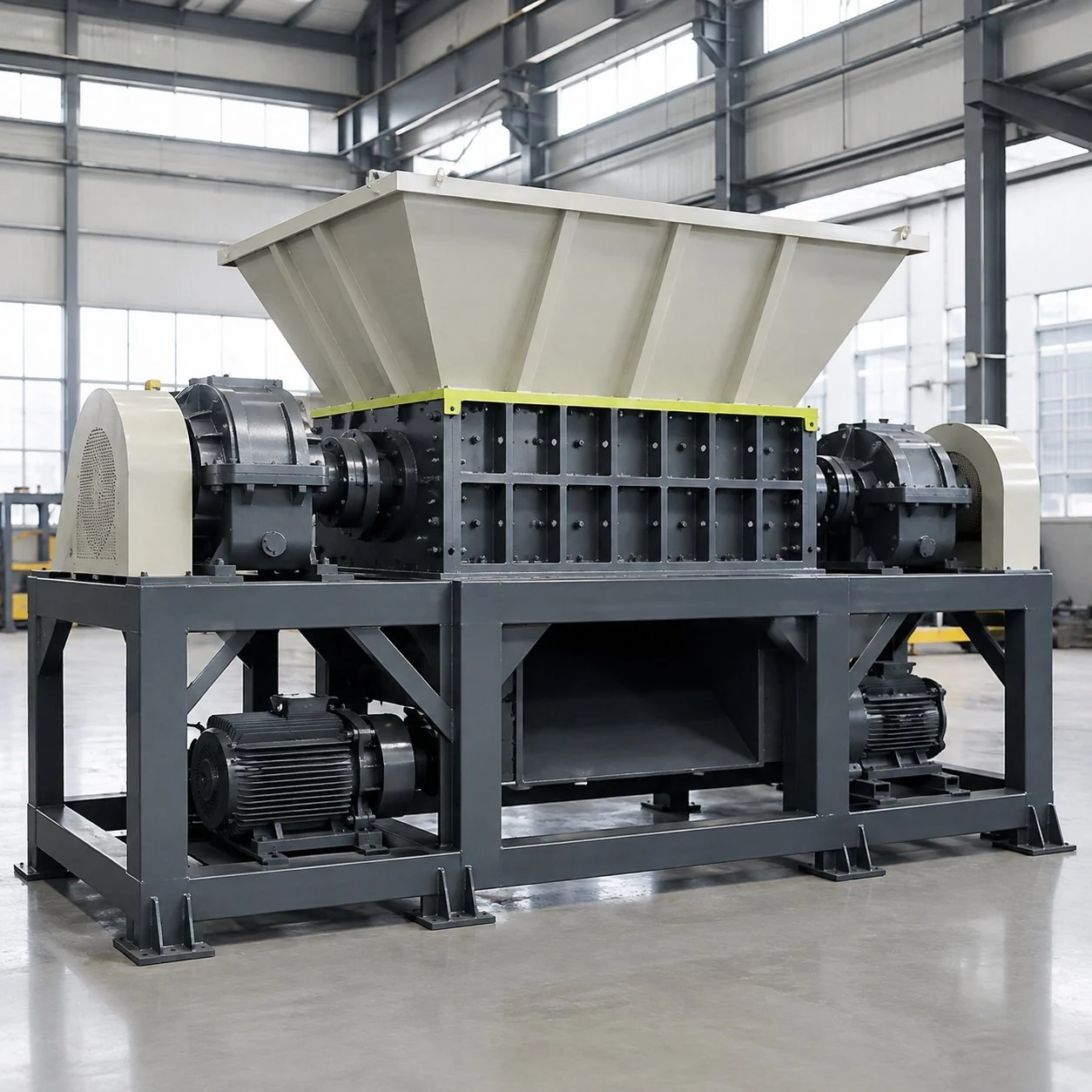 Heavy-Duty Processing
FY-SS02 Heavy-Duty Series
A project-engineered heavy-duty platform covering FY-SS02-600S / 600D / 800 / 1000 / 1200 / 1400 / 1600 for bulky, tough or mixed industrial waste.
- Bulky industrial waste
- Tough irregular items
- Mixed material streams
- Demanding applications
View machine details
FYXFER Model MapChoose the series before choosing the number
Four clear paths help buyers move from small parts to daily factory scrap, integrated finer reduction, or heavy industrial waste.
MiniFY-SS01-180
Small feed pieces, low-volume jobs and limited floor space.
1.5 kW reference configurationCompare FY-SS01
Standard CompactFY-SS01-300 / 400 / 500
Routine factory scrap with increasing drive, feed reference and cutter size.
3 / 4 / 7.5 kW reference drivesCompare compact modelsCompare FY-SS01 models — PDF
Two StageFY-SS01-300-2S / 400-2S / 500-2S
Upper and lower four-shaft cutting path where a finer integrated reduction route is required.
Material test requiredCompare 2S models
Heavy DutyFY-SS02 600–1600
Bulky, tough, mixed or high-duty industrial waste requiring project engineering.
Project-specific configurationExplore FY-SS02Compare FY-SS02 project classes — PDF
One picture, four selection paths
Use the visual guide for a fast starting point, then send material photos, maximum feed dimensions, output target and required volume for engineering review.
Send Material DetailsStandard plastic or heavy-duty shaft shredder?
This comparison defines the starting family. Cutter design, drive, hopper, protection, and discharge still require project review.
| Selection factor | Standard Plastic Shredder | Heavy-duty Shaft Shredder |
|---|
| Primary use | Routine reduction of common plastic waste | Robust reduction of bulky, tough, or mixed material |
|---|
| Material condition | More consistent plastic feed streams | Irregular shapes and more demanding waste streams |
|---|
| Configuration focus | Rotor, screen, feeding, and target granulation | Shafts, cutters, torque, hopper, and overload protection |
|---|
| Project inputs | Plastic type, feed size, output size, and throughput | Material mix, maximum size, density, contamination, and capacity |
|---|
| Line options | Feeding, discharge, screening, and controls | Heavy feeding, conveyors, separation, guarding, and controls |
|---|
ApplicationsWaste-processing projects across industrial operations
01Plastic Production
Reduce offcuts, rejects, containers, and routine plastic production waste.
02Recycling
Prepare material for sorting, transport, storage, or downstream processing.
03Manufacturing Waste
Handle bulky or irregular waste generated in industrial production environments.
04Project Integration
Coordinate feeding, discharge, separation, safety, and control requirements.
Project EngineeringA reliable recommendation starts with representative material data
Material variability can change machine selection. Clear samples, photos, feed size, contamination, capacity, and desired output help reduce project risk.
01Identify the material
Share material names, photos, condition, density, contamination, and safety concerns.
02Define input and output
Confirm maximum feed dimensions, expected throughput, and required discharge size.
03Configure the system
Review hopper, cutting system, drive, conveyors, separation, guarding, and controls.
04Prepare delivery
Confirm factory inspection, documentation, packing, installation guidance, and support.
Series FAQQuestions before choosing a waste shredder
Material data is more important than choosing from a model name alone.
Which shredder is suitable for common plastic waste?
The standard plastic shredder is the usual starting point for consistent plastic production waste and recyclable plastics. Material type, feed size, output target, and capacity must still be confirmed.
When should I consider a heavy-duty shaft shredder?
Consider the heavy-duty dual-shaft approach for bulky, tough, mixed, or irregular items where low-speed, high-torque reduction and stronger overload handling are required.
Can one shredder process every waste material?
No. Cutters, shafts, screen or discharge arrangement, drive, safety protection, and feeding system need to match the material and downstream objective.
What information should I send?
Send representative photos or video, material type, maximum feed dimensions, density, contaminants, hourly target, required output size, and site workflow.
Which waste shredder fits your material?
Send your material photos, feed size, throughput, target output, and workflow. FYXFER will help narrow the machine family and practical configuration.
Request a Recommendation