Bulky Material Intake
A large hopper and dual-shaft chamber can be configured for irregular and oversized feed.
A robust dual-shaft shredding platform for bulky, tough, mixed, or demanding industrial materials that require controlled low-speed, high-torque size reduction.
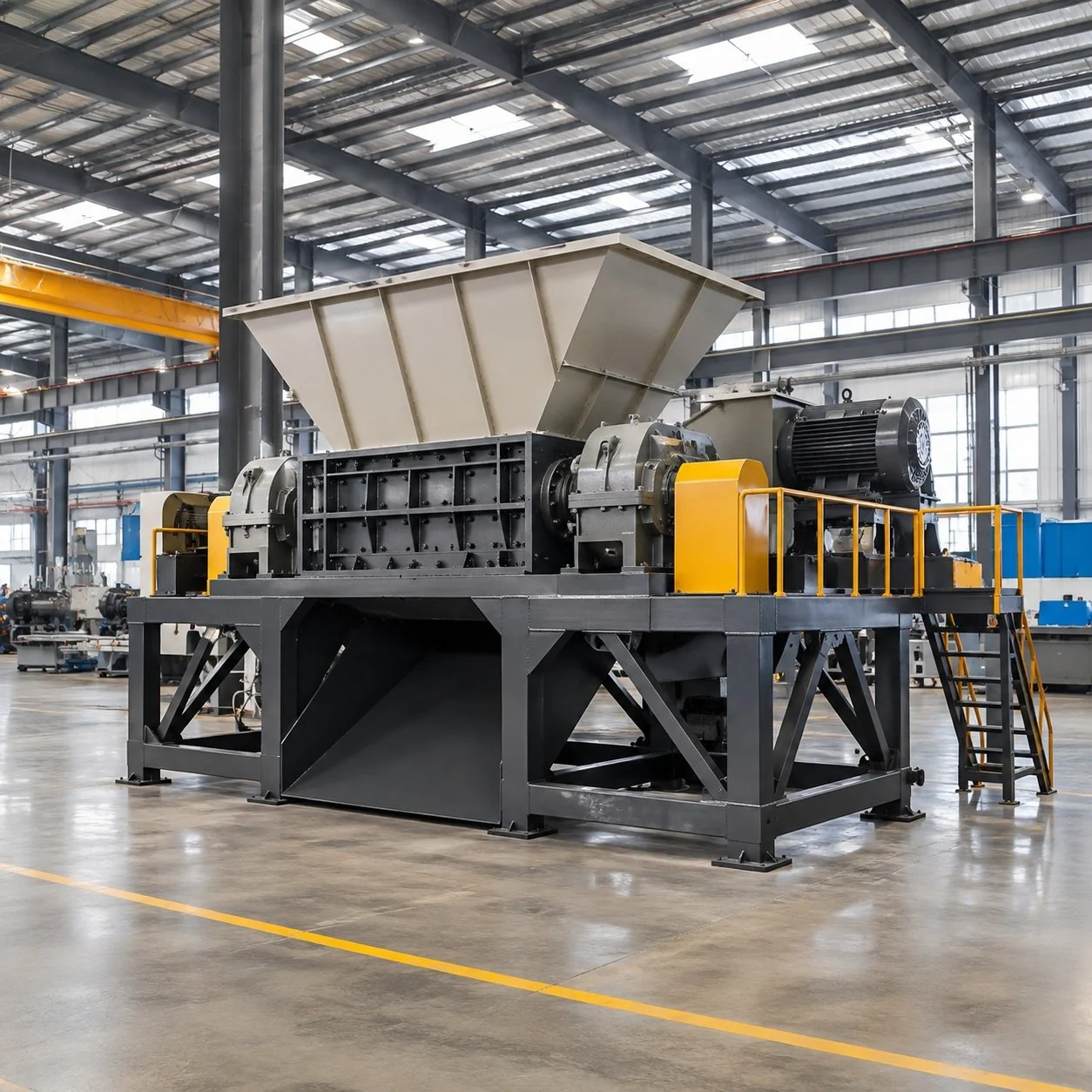
The FYXFER heavy-duty shaft shredder uses two slow-running cutter shafts to grip, tear, shear, and reduce bulky or resistant materials. The machine is configured around feed condition, material behavior, required output, and downstream process.
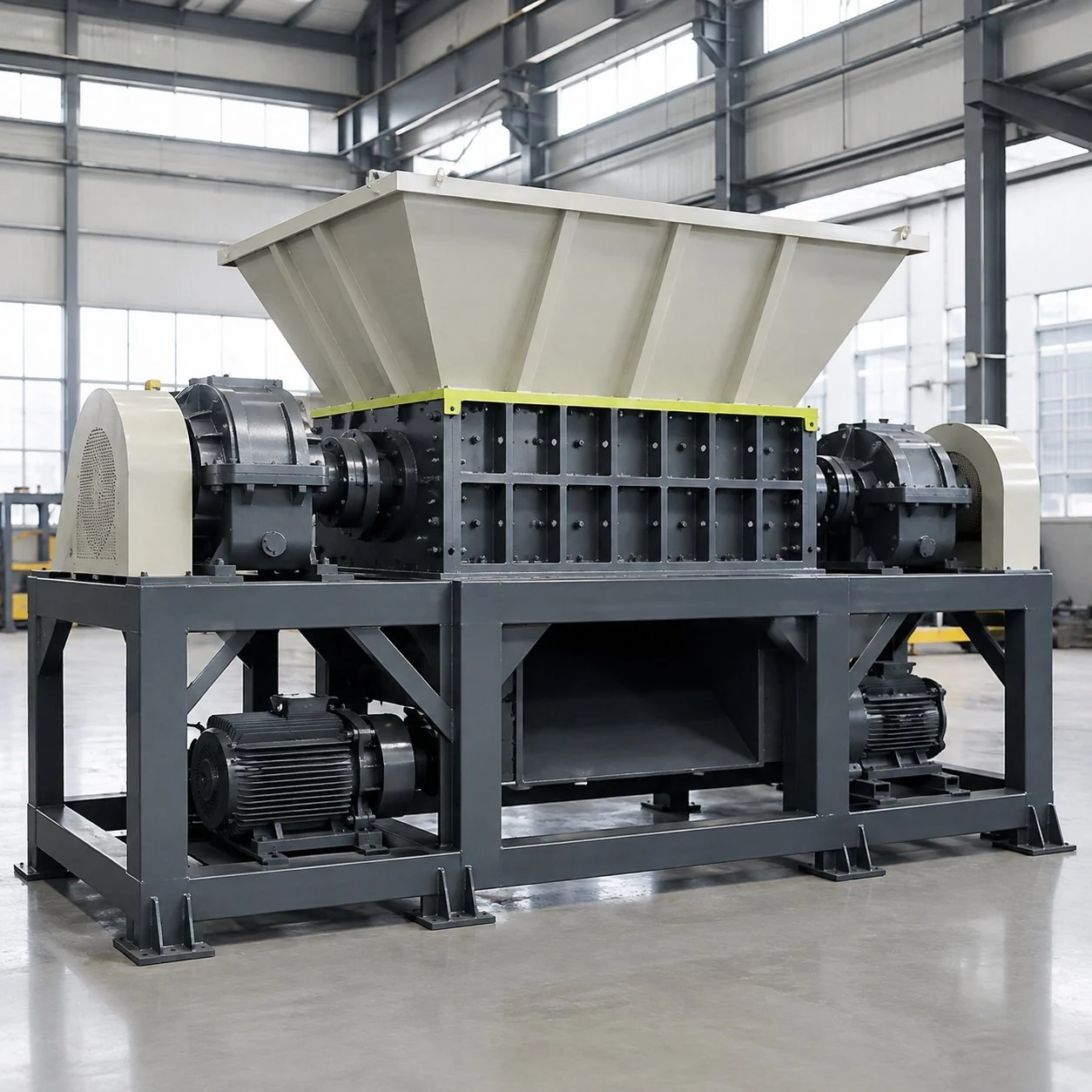
A heavy-duty primary shredder for projects where material size, toughness, bulk, contamination, or feed variability exceeds the practical range of a compact standard machine.
A large hopper and dual-shaft chamber can be configured for irregular and oversized feed.
Drive and cutter selection focus on controlled tearing and shearing under demanding loads.
Prepare suitable waste for transfer, sorting, recovery, disposal, or downstream processing.
Stop and reverse functions can support recovery from material overload and jamming events.
Feeding conveyors, discharge conveyors, separators, and supporting controls can be reviewed.
Frame, hopper, shafts, cutters, drive, maintenance access, and guarding are defined by scope.
Confirm the waste stream and load material through the agreed manual or mechanical method.
Counter-rotating cutters grip and draw suitable material into the cutting chamber.
The shaft and cutter arrangement reduces the feed through controlled high-torque action.
Transfer reduced material to collection, sorting, separation, or the next processing stage.
Share the material composition, normal and maximum piece size, bulk density, contamination, feeding method, expected throughput, target output, and downstream process. Photos, video, and representative samples improve selection accuracy.
| Machine Type | Heavy-duty dual-shaft industrial shredder |
|---|---|
| Suitable Feed | Bulky, tough, mixed, irregular, or demanding industrial waste after application review |
| Cutting System | Dual shafts and cutter geometry configured for the confirmed material and required result |
| Drive | Electric or hydraulic arrangement evaluated according to torque, duty, and control needs |
| Capacity | Selected according to actual feed condition, loading method, target output, and duty cycle |
| Power Supply | Configured for the destination market and project |
| Customization | Hopper, shafts, cutters, frame, drive, conveyors, guarding, separation, and controls |
Selection depends on the most difficult material in the stream—not only the average piece.
Use this platform when feed pieces are larger, harder to grip, more resistant, contaminated, or require a stronger primary reduction stage.
A compact standard shredder may be more practical for suitable runners, trims, offcuts, small rejected parts, and regular in-plant plastic waste.
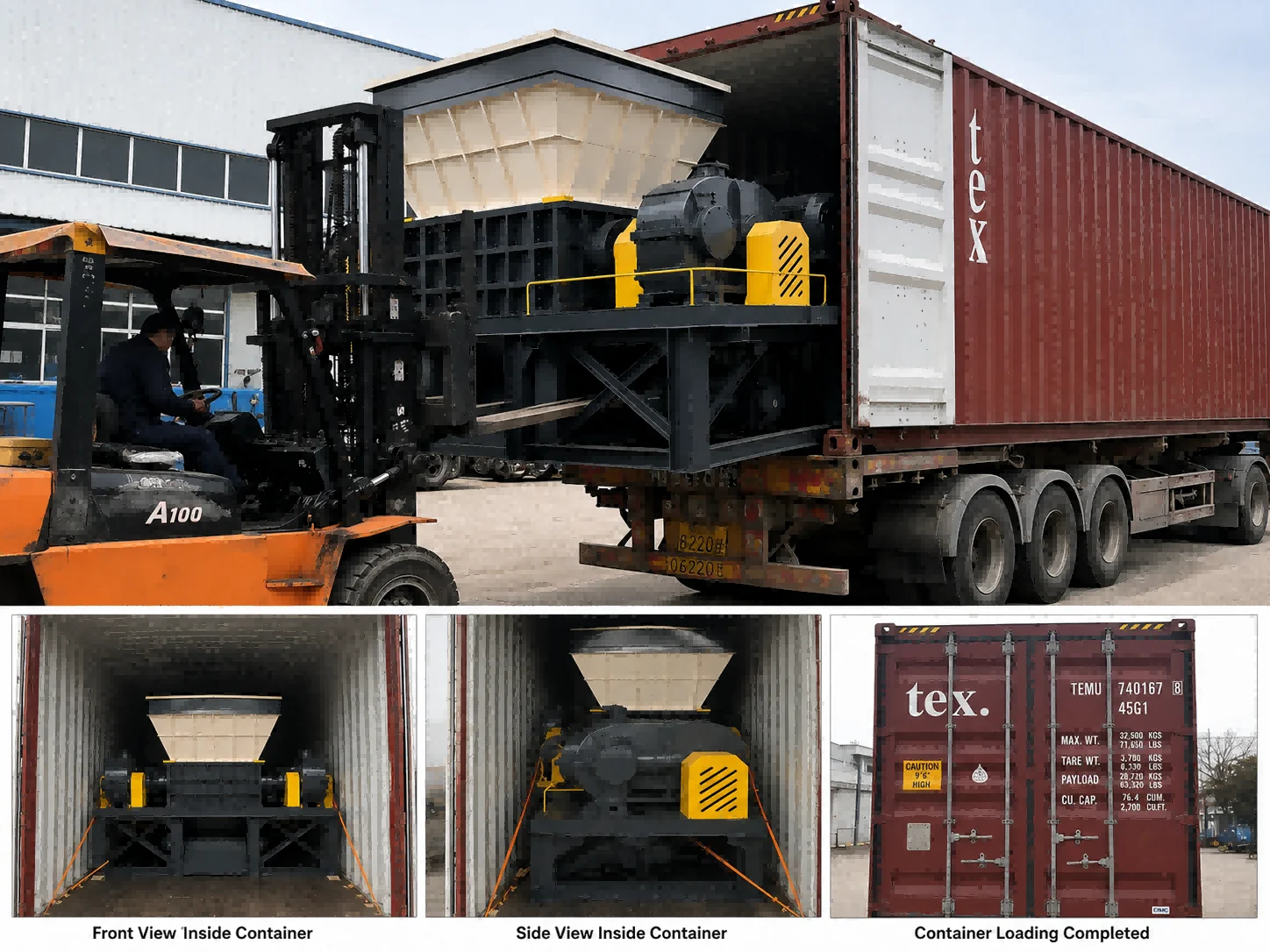
The supplied configuration should be checked against the confirmed material and project scope. Export loading and securing are planned around the final machine dimensions and shipping method.
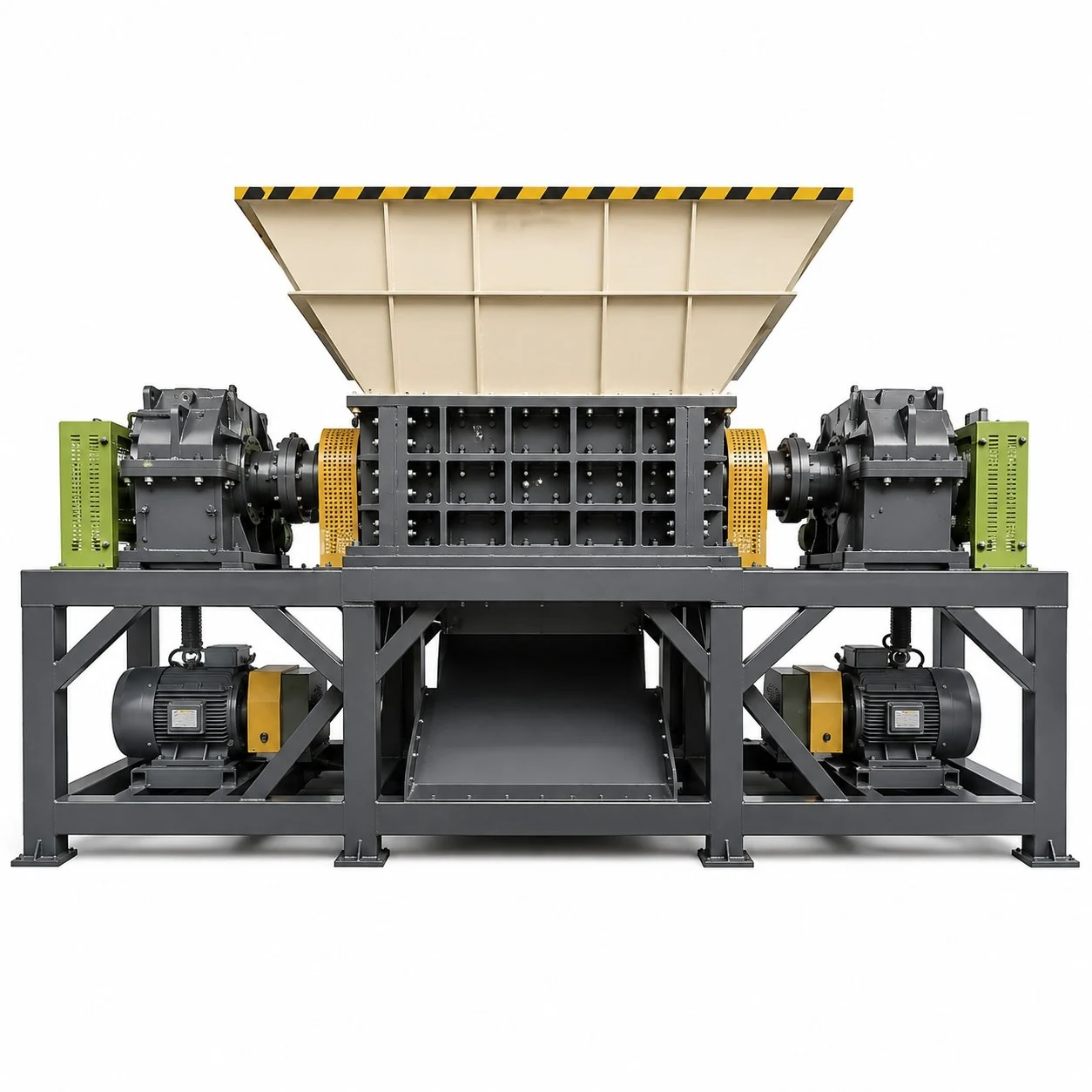
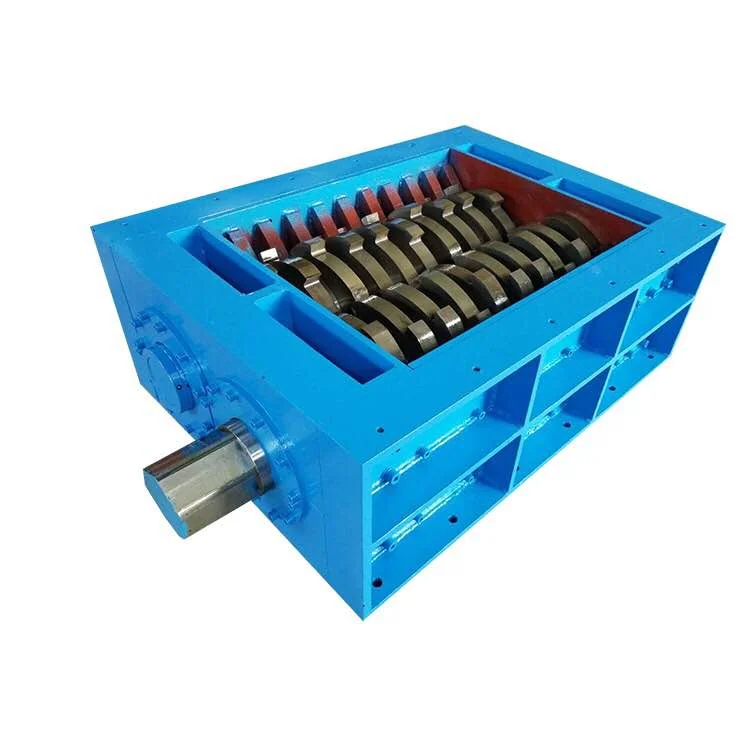
Review large molded parts, thick sections, crates, containers, and mixed rigid plastic feed.
Evaluate suitable rubber products and tire-derived feed according to construction and steel content.
Reduce suitable wood, pallet, board, and packaging waste after contamination review.
Assess dense, bundled, or difficult flexible material for the correct shaft and feeding arrangement.
Review suitable metallic or mixed feed carefully for cutter, drive, wear, and separation needs.
Prepare suitable mixed waste streams for sorting, recovery, transfer, or downstream processing.
Please provide material composition, minimum and maximum piece size, weight or bulk density, contamination, hourly or daily volume, feeding method, target output, downstream process, site limits, and destination power supply. Photos, video, and samples are strongly recommended.
Cutter thickness, geometry, spacing, shaft arrangement, and material are reviewed around the feed and required result. The most difficult expected material should be disclosed before configuration is confirmed.
The control strategy can stop and reverse the shafts when the configured overload condition is detected. This supports recovery, but unsuitable material and operating limits must still be managed correctly.
Possibly, but mixed streams require careful review. Metal, stone, hazardous material, liquids, pressure vessels, batteries, and other contaminants may require removal or dedicated upstream preparation.
Yes. Feeding conveyors, discharge conveyors, magnetic separators, sorting equipment, and control interfaces can be evaluated according to the complete process flow.
Export preparation is planned around the final machine dimensions, weight, lifting points, protection method, securing plan, documentation, and selected shipping route.
The model code identifies the FYXFER project class. It does not by itself define motor power, feed width or capacity; final configuration follows the actual waste stream and approved drawing.
Compact single-drive 600-class starting point for reviewed heavy-duty materials.
Verified reference: 11 kW drive; final application review required.Request configurationDual-drive 600-class option when the single-drive route is not appropriate.
Project-specific drive, cutters and feed arrangement.Request configurationMedium heavy-duty project class for larger, tougher or more variable waste.
Final specifications after material review.Request configurationExpanded heavy-duty class for industrial feeding and downstream integration.
Final specifications after material review.Request configurationLarge project class for demanding primary reduction and engineered line layouts.
Drive, cutters and dimensions confirmed by approved drawing.Request configurationLarge industrial project class for bulky-feed systems and supporting equipment.
Project-specific configuration.Request configurationExtra-large project class for high-duty industrial waste-processing lines.
Project-specific configuration.Request configurationEvaluate this platform for bulky, tough, mixed or variable waste requiring primary size reduction.
Disclose the full waste composition, largest and most difficult pieces, density and contaminants.
Agree the required output distribution, throughput, feeding method and downstream process.
Confirm cutters, drive, hopper, discharge and duty through project review and a representative trial.
Use this checklist for an initial review. Final machine limits, options and acceptance criteria are confirmed in the project quotation.
Compare the published project classes and define feed, output, duty and system interfaces before configuration.
FY-SS02-600S · FY-SS02-600D · FY-SS02-800 · FY-SS02-1000 · FY-SS02-1200 · FY-SS02-1400 · FY-SS02-1600
PDF · English · 295.8 KB
FYXFER_FY-SS02_Series_Selection_Guide_EN.pdf
Send material photos, maximum piece dimensions, contamination, expected volume, feeding method, target output, and downstream process. Our team will help define the appropriate heavy-duty shredder configuration.
FY-SS02 is a custom-engineered heavy-duty industrial shredder platform. Define the complete waste stream and downstream result before selecting the cutting system and drive.
| System type | Custom-engineered heavy-duty industrial shredder |
|---|---|
| Machine principle | Low-speed, high-torque tearing and shearing |
| Intended feedstock | Defined and approved during application review |
| Shaft and cutter configuration | Selected for material, contamination, output and duty |
| Feed opening and hopper | Sized to approved feed pieces and loading method |
| Drive arrangement | Electric or hydraulic; selected by torque and duty |
| Power, torque and speed | Defined after cutting-system selection |
| Throughput and output | Material- and process-dependent; project quoted |
| Infeed and discharge | Configured for site material flow |
| Electrical and controls | Destination standard and line interface |
| Dimensions and weight | Issued with the approved general arrangement drawing |
No universal power, capacity, feed opening, cutter arrangement, dimensions or weight applies. Final specifications are defined in the approved quotation, general arrangement drawing and order confirmation. Disclose contaminants and hazardous, pressurized or battery-containing feed during application review.
Use the industrial shredder selection guide to compare material size, output, throughput, motor and cutter requirements before confirming FY-SS02.